Peptides are rapidly growing in popularity for weight loss, recovery, and skin health. Learn what's safe, what's not, and why medical guidance matters.
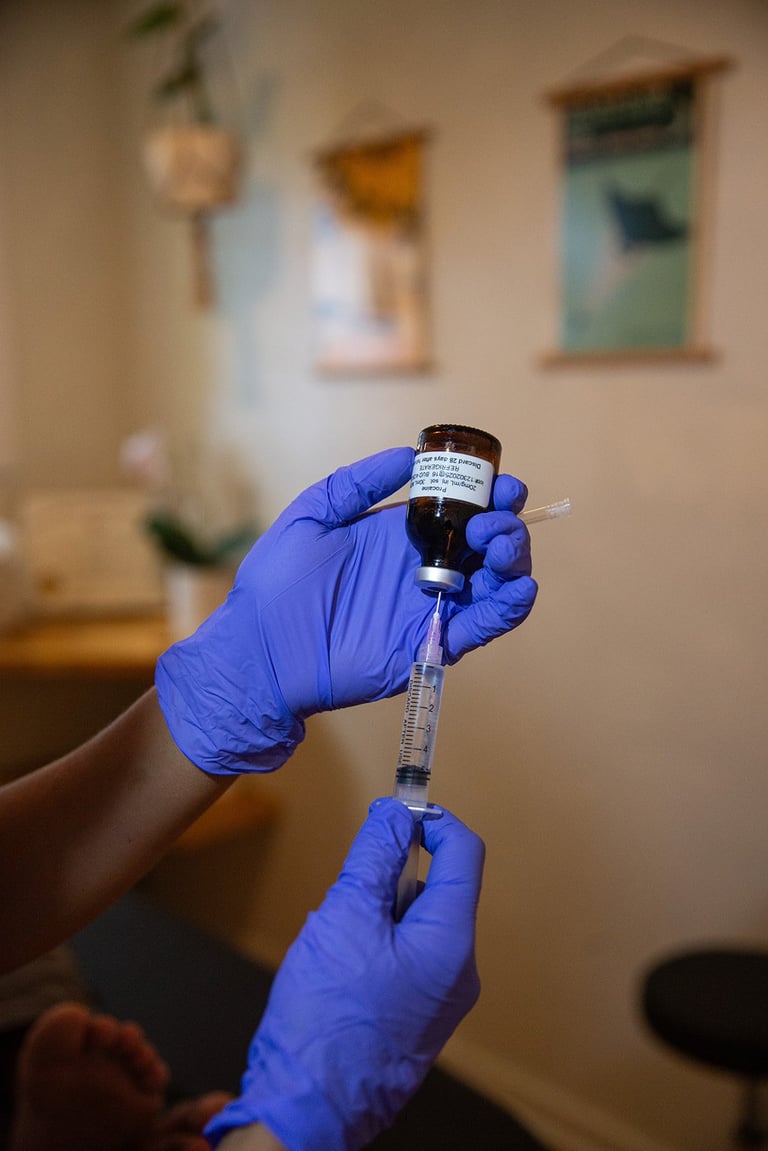
Peptides are everywhere right now.
From weight loss to recovery to skin health, they've quickly become one of the most talked-about tools in longevity and regenerative medicine.
But here's the reality no one is talking about clearly:
Peptides are the wild west of medicine right now.
There are FDA-approved peptide-based medications. There are compounded options used under medical supervision. And then there are products being sold online with little to no guidance.
Understanding the difference is what keeps people safe.
Peptides are short chains of amino acids that act as signaling molecules in the body.
They help regulate important processes like:
In medicine, certain peptide-based therapies are used to support these systems in a targeted way.
The rise of GLP-1 medications changed everything.
Medications like semaglutide and tirzepatide brought peptide-based therapies into the mainstream by showing how powerful targeted signaling can be for metabolism and weight loss.
Since then, interest in peptides has exploded.
Now people are asking:
And that's where things start to get complicated.
There is a major difference between:
FDA-approved peptide-based medications
Compounded therapies used under medical supervision
Products sold online without oversight
The form, quality, and use all matter.
And most importantly:
Dosing, safety, and appropriate use are not one size fits all.
This is where people get into trouble.
Peptides are not something to guess on.
Before starting any peptide-based therapy, it is important to:
Working with a healthcare provider allows for:
This is what makes the difference between a thoughtful approach and unnecessary risk.
Copper peptides are commonly used in topical formulations to support skin health.
They are often included in skincare to:
These are widely used and generally well-tolerated when used appropriately.
BPC-157 is often discussed in the context of tissue support and recovery.
It has been studied for its potential role in:
Interest in this area continues to grow, especially among active individuals.
Certain peptides are being explored for their role in immune function.
These may be used in clinical settings to support:
As with all peptide-based therapies, appropriate use and guidance are key.
GLP-1 receptor agonists are the most widely known peptide-based therapies.
They are used clinically to support:
These medications are what brought peptides into the spotlight and continue to be a major part of medical weight loss care. Learn more about medical weight loss →
Peptides are powerful tools.
But they are not something to approach casually.
The difference between:
Safe and unsafe
Effective and ineffective
Comes down to:
Start with a consultation.
Understand your body, your goals, and what is actually appropriate for you.
There is no one-size-fits-all protocol.
And what you see online is often incomplete or misleading.
Peptides are short chains of amino acids that act as signaling molecules in the body. They help regulate important processes like metabolism, tissue repair, immune function, and skin health.
The safety of peptides depends on the specific peptide, its source, dosing, and whether it is used under appropriate medical supervision. FDA-approved peptide medications have established safety profiles. Compounded peptides require careful medical guidance.
Many peptide-based therapies do require a prescription and should be obtained through a licensed healthcare provider. Be cautious of peptides sold online without a prescription or medical oversight.
GLP-1 medications like semaglutide are peptide-based therapies that specifically target the GLP-1 receptor to support appetite regulation and metabolic health. Not all peptides work on the GLP-1 pathway. GLP-1 medications are among the most studied and FDA-approved peptide therapies available.
At Hawaiʻi Longevity and Regenerative Medicine, we take a personalized, medically guided approach to peptide-based therapies.
We serve patients in Kona, Holualoa, Waimea, Waikoloa, Captain Cook, and across the Big Island.
If you are curious about peptide therapy and want a safe, personalized approach, schedule a consultation to learn what is appropriate for you.